%201.svg)
%201.svg)


Why Waiting for Probate Could Be Costing Your Law Firm More Than You Think
Date:
March 9, 2026
Author:
Roni Dersovitz, Esq.
.png)
When a plaintiff passes away during litigation or following a settlement, probate courts assume jurisdiction over fund distribution according to the decedent's will or state intestacy laws. While attorneys' fees remain legally recoverable from the estate, the timing of payment becomes subject to probate timelines—a process notorious for its unpredictability and lengthy duration.
The complexity of estate matters directly correlates with delay duration. Simple estates may resolve within six months, while contested matters involving multiple beneficiaries or disputed assets can extend beyond two years. Throughout this period, law firms face a critical challenge: operational expenses continue accruing while earned contingency fees remain inaccessible.
The financial impact extends beyond delayed payments. Consider the opportunity cost when earned fees remain tied up in probate proceedings:
The below framework enables law firms to systematically assess the true financial impact of probate delays versus litigation funding options, providing quantifiable data to make informed strategic decisions about cash flow management and firm growth opportunities.
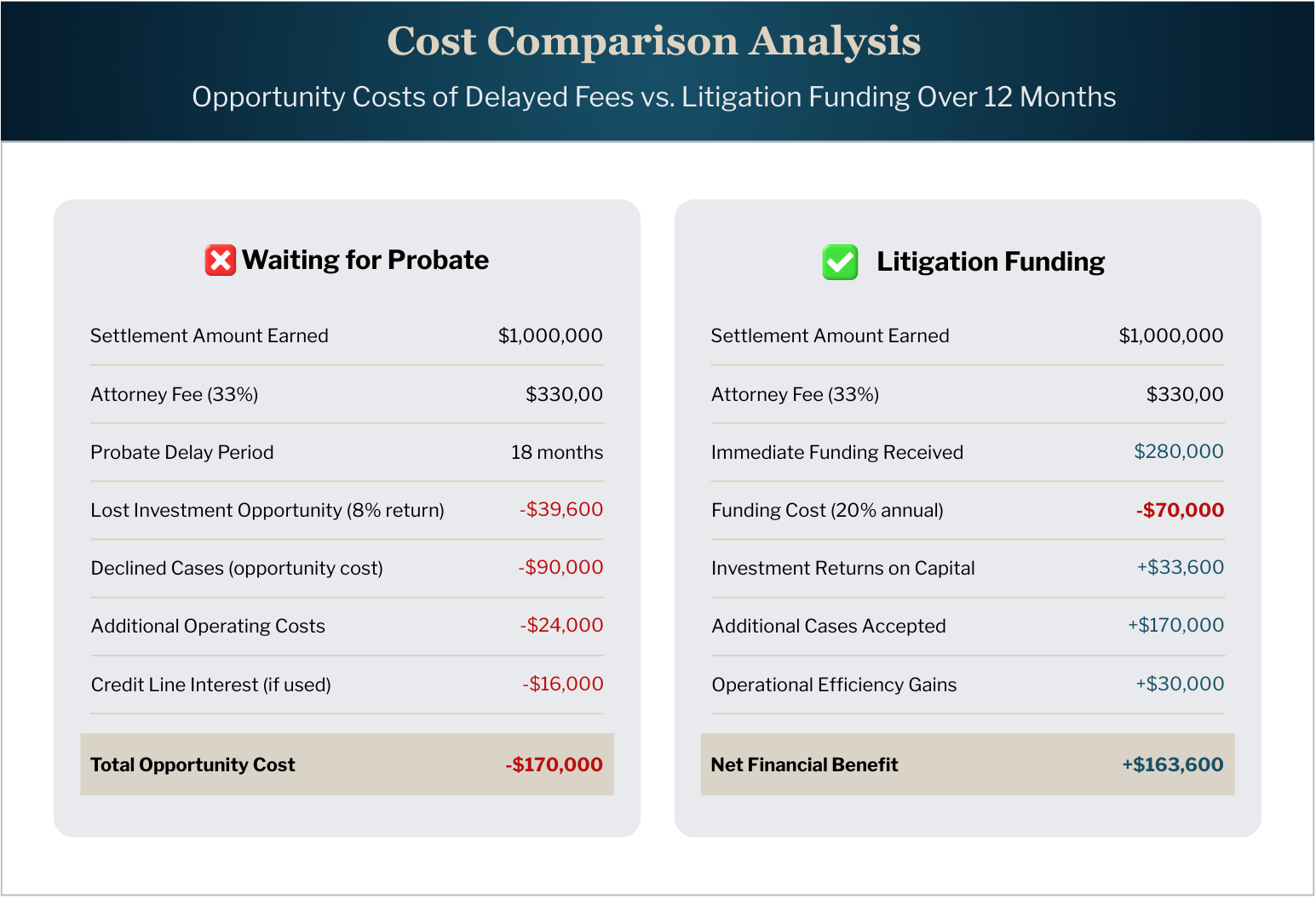
"The irony is that law firms are sitting on significant earned assets while struggling with immediate cash needs," explains Roni Dersovitz, founder of RD Legal Funding. "We've worked with top-tier firms that had millions in recoverable fees tied up in probate, yet couldn't afford to hire additional associates or invest in case development. That's when you realize the traditional banking system fundamentally misunderstands the legal industry's unique cash flow dynamics."
Post-settlement/judgment funding represents a strategic solution specifically designed for this challenge. Unlike traditional lending that focuses on credit scores and collateral requirements, litigation funding recognizes the unique value of legal receivables and contingency-based fee arrangements.
RD Legal Funding specializes in providing immediate capital access based on earned fees, regardless of pending probate status. This approach acknowledges that law firms' most valuable assets—contingency fee arrangements and settlement receivables—are typically excluded as acceptable collateral by conventional lenders.
Successful integration of litigation funding requires understanding when and how to leverage these financial tools effectively. The optimal timing often occurs immediately following settlement negotiation or judgment entry, before probate complications arise.
Smart firms establish funding relationships proactively rather than reactively. By developing these partnerships before cash flow emergencies occur, partners can negotiate better terms and ensure rapid deployment when opportunities arise.
While probate delays represent one significant use case, litigation finance addresses various cash flow challenges facing modern law firms:
For partners evaluating litigation funding options, the decision often centers on growth versus constraint. Firms that proactively address cash flow challenges through strategic financing typically demonstrate stronger growth trajectories and improved competitive positioning.
The key lies in viewing litigation finance not as emergency funding but as a strategic business tool that optimizes cash flow management and enables opportunistic growth decisions.
Ready to optimize your firm's cash flow management? Contact RD Legal Funding to explore how litigation finance can provide immediate access to your earned fees, regardless of probate delays. Call (800) 565-5177 or email info@legalfunding.com for a confidential consultation.

.png)
.png)
.png)