%201.svg)
%201.svg)


The $2.67 Billion Lesson Every Contingency Firm Needs to Hear
Date:
April 30, 2026
Author:
Roni Dersovitz, Esq.
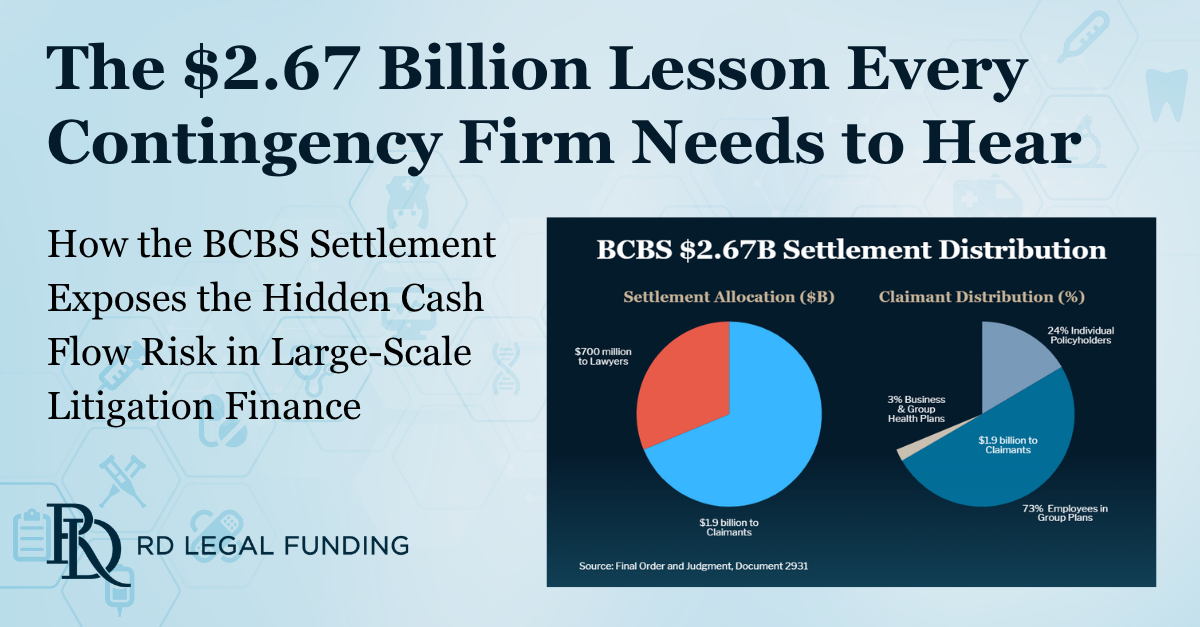
Attorneys' fees in U.S. class action settlements routinely range between 20% and 30% of total recovery — yet the gap between winning and getting paid can span years. The $2.67 billion Blue Cross Blue Shield (BCBS) Subscriber Settlement is the largest private healthcare antitrust recovery achieved without government intervention. It is a landmark case study in both the power of contingency-based litigation and the structural cash flow challenges that follow even the most successful outcomes.
For senior partners managing firm finances, this settlement is more than a legal milestone. It is a real-world illustration of why litigation finance has become an essential tool for forward-thinking practices.
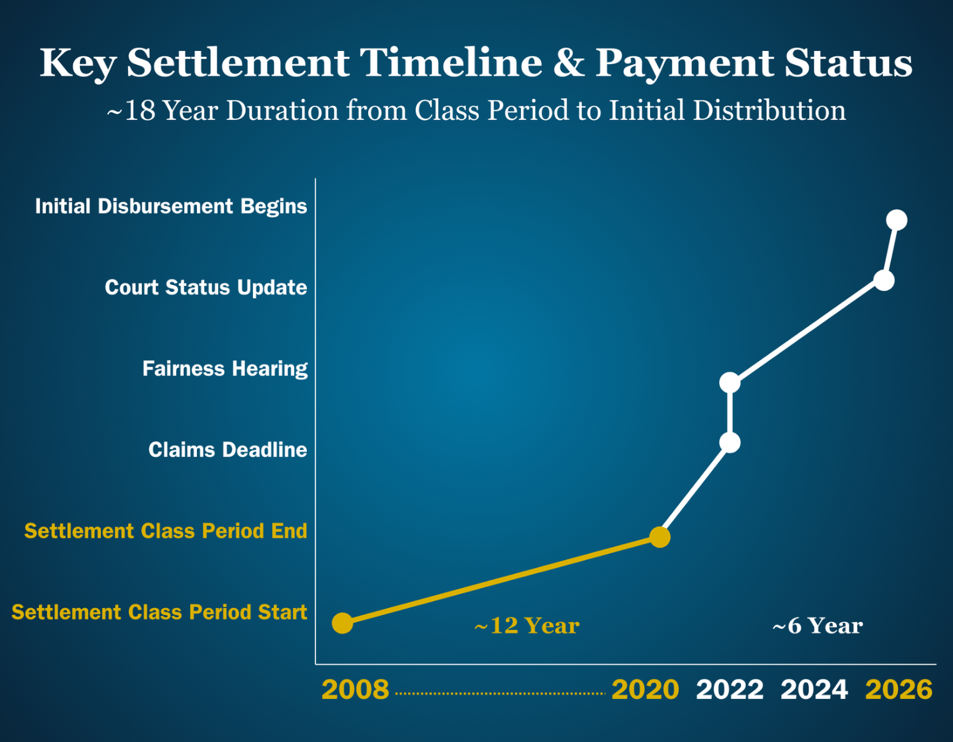
Finalized in 2022, the BCBS settlement resolved antitrust claims on behalf of subscribers who held BCBS plans between 2008 and 2020 (for fully insured plans) and between 2015 and 2020 (for self-insured accounts). The court-appointed claims administrator, JND Legal Administration, identified a total of 6,077,526 claims. That figure likely understates actual economic participation when factoring in dependents and covered lives within group plans, adding both scale and complexity to claim valuation.
After legal fees and administrative costs, approximately $1.9 billion remains for distribution, with an initial payment window targeting May 2026.
Even with liability resolved, distribution modeling in a case this size is far from straightforward. The settlement formula relies primarily on premiums paid and administrative fees — but there is no consolidated dataset of validated premiums from defendants, and no aggregate report summarizing total approved premiums across all claims.
For legal funders and the firms they serve, these unknown variables make it difficult to forecast distributions with precision. Assumptions must be built on incomplete data, which extends the effective timeline between resolution and receipt of earned fees.
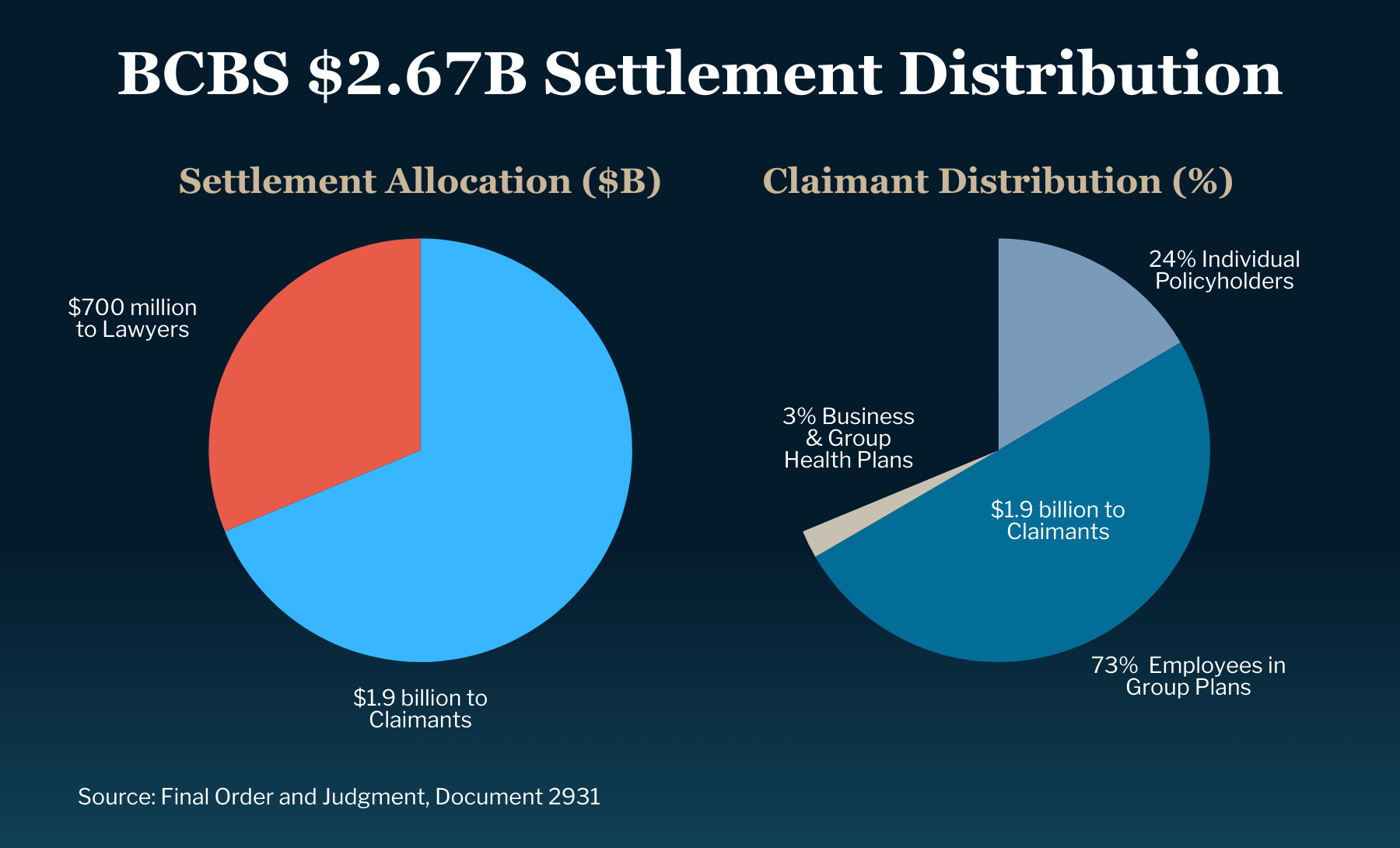
Plaintiffs' counsel in the BCBS matter requested up to $667 million in attorneys' fees — a figure that reflects years of complex litigation, extensive discovery, expert testimony, and trial preparation. By any measure, this is an extraordinary result.
And yet, even a $667 million fee award does not eliminate the fundamental problem facing contingency-fee practices: the money is not available when the work is done.
Large class settlements create a well-documented timing mismatch. A firm may have resolved liability, earned its fee, and moved on to new matters — while waiting months or years for administrative and court processes to conclude. Operating costs, payroll, overhead, and the capital demands of new contingency cases do not pause during that window.
"Law firms working on contingency put in the time, take on the risk, and deliver the result — but the financial system doesn't always reward that on a reasonable timeline. Litigation finance exists to close that gap. It allows firms to treat their earned receivables as the asset they already are." — Roni Dersovitz, Founder, RD Legal Funding
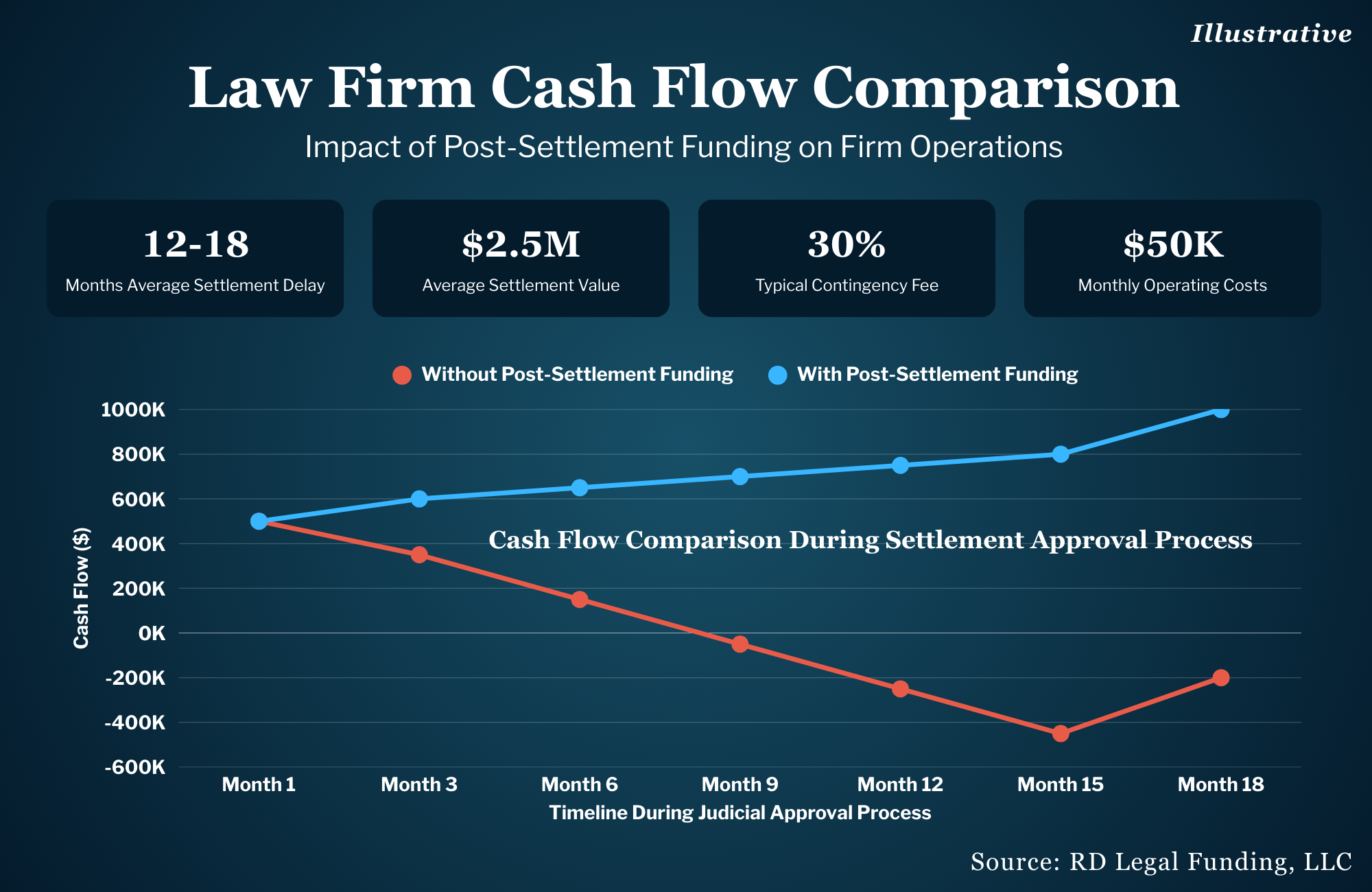
Post-settlement/judgment litigation funding is specifically designed for this scenario. When a settlement has been reached or a judgment entered — meaning liability is no longer at issue — firms can monetize earned receivables tied to those outcomes rather than wait through extended administrative timelines.
In a matter like BCBS, where the legal work is complete but payment distribution remains on a multi-year horizon, legal finance provides a mechanism to:
This is not speculative capital deployment. It is the conversion of an existing, legally-recognized fee receivable into working capital — on a timeline that makes business sense.
The BCBS settlement will be studied for years as a model of plaintiff-side class action success. But for managing partners and practice group leaders, it also offers a candid look at the operational realities that follow large contingency wins.
Litigation funding is no longer a niche instrument. It is a strategic financial tool for practices that understand the value of their earned receivables and refuse to let administrative timelines dictate their firm's financial health.
RD Legal Funding provides tailored capital solutions for law firms by accelerating access to post-settlement and earned fees. We understand that managing a successful legal practice requires more than just winning cases—it requires strategic financial planning and reliable capital partnerships.
To learn more about strategic options for your practice:
Phone: (800) 565-5177
Email: info@legalfunding.com
Website: www.legalfunding.com
Roni Dersovitz is the founder and CEO of RD Legal Funding, a pioneer in providing innovative liquidity solutions for contingency law firms, settlement claimants, and legal receivables. With over 25 years of experience in litigation finance, Roni has helped transform legal victories into immediate financial results for thousands of clients. To learn more, visit www.legalfunding.com or contact us at info@legalfunding.com or (800) 565-5177.


.png)
.png)